
Skip to content
H.Tech

For the person who decides on technology and answers for it

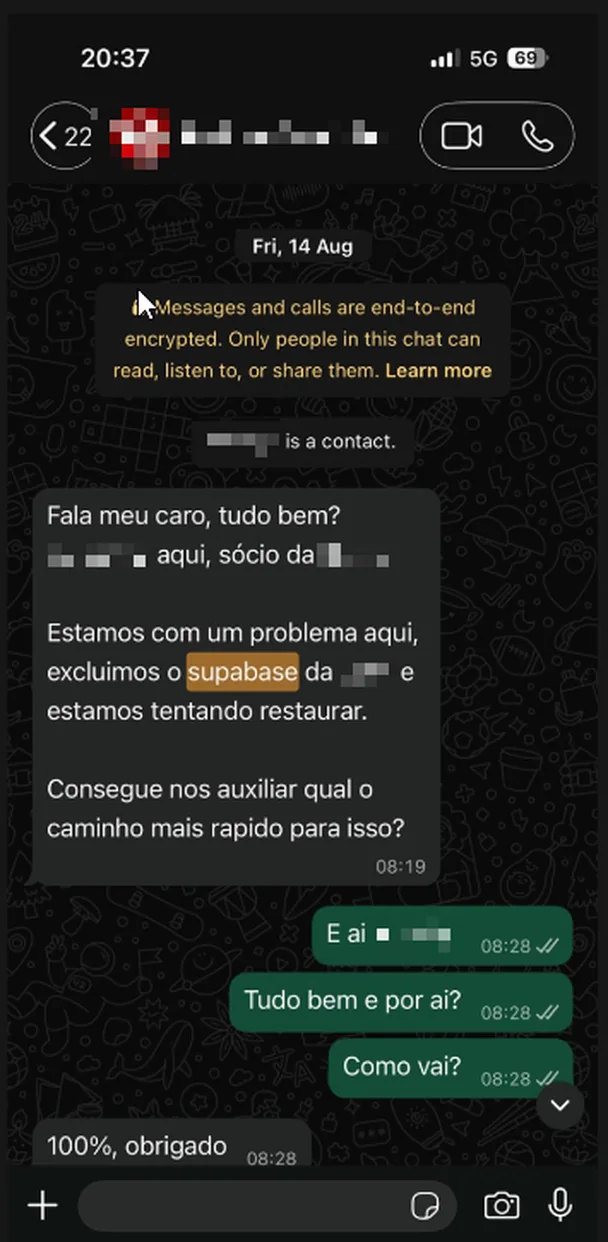
One Friday morning, a founder deleted their own database.

The founder did nothing wrong. Writing software is not their job, and nobody had ever sat down with them to explain that this can happen.

I do. I have 16 years in technology, I am a CTO today, and I still write code every day. At H.Tech I sit on your side for the technology decisions you cannot get wrong, and I write the code when it is time to build. If the work needs more people, I put the team together and join it.

Two ways to start

You either run a company with a product in production, or you built one with AI

Technology and AI Council, with a squad when you need one

I meet with you every two weeks for twelve months, in 90-day cycles. You bring what is on your desk: hire or wait, rebuild the system or carry it another year. At the start of each cycle I write down what the problem costs you in dollars today, and at the end we check.

I take a few clients per cycle, one on one, so there is sometimes a waiting list. I do not discount to skip it.

For reference, a US fractional CTO runs a median of US$8k to 12k a month. I size yours in the first call.

How the squad works

You built it with Lovable, v0, Replit, Bolt or Base44, and people use it

The tool got you to real users faster than any team would have. Now you need to know what holds when the next hundred customers arrive, and what fails first.

I sit with you, read the product and the numbers, and hand you the plan: what to fix, in what order, and what can wait. With the code scan, I read your repository line by line before we talk.

  • Diagnostic with meUS$1,500
  • Diagnostic plus code scanfrom US$4,500

Prices in US dollars, for clients outside Brazil.

How I work

The first thing I do is measure

  1. Measure

    When you have a team and a repository, I run Evolve: 86 indicators across seven dimensions, built on DORA, SPACE, NIST, COBIT and ITIL, each one with its formula and its source. Evolve reads your repository with read-only access. When the data is not there, the report says "not instrumented" instead of guessing.

  2. Decide

    The decision that weighs most is almost always about people: who to hire, and what to do when someone can no longer keep up. Then comes rebuild or keep what you have. I sit with you on both, in business language.

  3. Build

    When it is time to build, H.Tech builds and I am in the code. You approve the spec before anyone writes code, and the tests run before any change ships. The 25 repositories of my own products run this way, and so does client work.

H.Tech squad

When you are short of people, I put the team together and join it

Some work does not fit in a call every two weeks. The product has to ship, your team cannot carry it, and hiring from zero takes months you do not have.

H.Tech then puts a dedicated squad on your product. The engineers work the way my own products are built, spec first and tests before release. I lead them closely and write code with them.

A company that depends on a vendor has the same problem as the founder who is the only one who knows where everything lives, plus an invoice. I set the squad up for the day your company takes it over.

  1. The work sets the team size

    We start from what needs to be live and by when. That tells us how many people and which profiles.

  2. The squad works on your product

    You follow what shipped and on what date. You will not get timesheets: hours measure effort, and you bought delivery.

  3. Your company can keep the people

    When it makes sense, you hire the squad members directly. The documentation, the access and the way of working go with them, and I stay through the handover.

Working from Brazil with a US company

Your working day and mine overlap by six hours on the East Coast

UTC-3 all year

Same working day

São Paulo has no daylight saving time. I am one hour ahead of New York in the summer and two in the winter, and at least four hours overlap with the West Coast.

EN in writing

English on every channel

Calls, Slack, specs and the weekly written report are in English. I work in your GitHub and your Jira, or in ours if you have none.

USD invoice

Paid like a US vendor

Htech IT Consulting LLC, our US company, invoices you in dollars, and you pay by ACH or wire to a US bank account. The W-9 goes with the first invoice.

Who it is for

You have probably said one of these

Out loud, or driving alone. If one of them is yours, I already know where our call starts.

  • Solo founder

    “If I disappear for a week, nobody can touch this”

    You built it, you maintain it, and you are the only one who knows where everything lives. That works until you get sick, travel, or try to hire someone.

  • After the second opinion

    “A developer told me we have to rebuild from scratch”

    Someone looked at the code, made a face and said start over. That might be true, or it might be a sales pitch. Today you have no way to tell which.

  • Team that misses dates

    “We keep missing deadlines and I never know whose fault it is”

    Every explanation comes wrapped in a technical term, and you leave the meeting without knowing if the problem is people, process or technology.

  • First hire

    “I am about to hire my first engineer”

    You will judge résumés, rates and everything the candidate says about what you built. It is the most expensive hire to get wrong, and the one you have the least basis to make.

  • Big customer coming

    “They want to look inside our system”

    Enterprise customer or investor, the script is the same. Someone goes through everything before signing, and right now you would find out what is in there at the same time they do.

  • Inherited code

    “The person who built it left”

    You kept the logins, the code and no explanation. Before you put someone new on it, you need to know what is in there.

And it is not for you if

  • You are still validating the idea and nobody uses the product yet. Spend this money finding customers, and come back when you have them.
  • You want someone to close tickets without asking whether they make sense. When I get into the code, I also get into the conversation about why.
  • You want an automated report. Tools that do that on their own cost little. Here you pay for a person who reads the result and sits down with you after.
  • You have no mandate to change how the team works. Without it, what I say stays a recommendation and the team carries on as before.

Proof

75+projects delivered22of them built with AI

Sixteen years of systems in production and 15 teams led. Twenty-two of those projects started in 2023 or later, with AI inside the process from the spec to the review. Your project gets the same way of working.

At a receivables asset manager in Brazil's capital markets, I cut annual technology spend by 58% over four years. The team went from 22 people to 12 and shipped more than before. The one line I refused to cut, from the first month to the last, was training.

At a financial services company, I put an AI pipeline into due diligence. Four people's work now takes one, and the monthly cost of that step fell by about 80%.

Clients I can name

YamahaEmersonLINKA

Products I built and run

  • TidyBee SaaS for independent house cleaners in the United States, billed in dollars, in English, Spanish and Portuguese.
  • Orkadu Adaptive strength training app, live on both app stores.
  • Órbita The operations hub H.Tech runs on: CRM, tickets, signed proposals and billing, written in Rust.

Contracts, code and data

What you sign, what you keep, and what I can see

  1. Before I look

    I sign your NDA before I see anything. Evolve and the code scan use read-only access, with MFA and the least privilege the work needs. You revoke it when we finish.

  2. What you keep

    Your data is yours, exportable in an open format at any time. When H.Tech builds, you license software already running in production, for unlimited users, while the engagement runs. If you want to own the code, we quote the purchase separately.

  3. How it ends

    You pay month by month and can stop at the end of any month. Every big decision is written down with an owner and a date, and those documents stay with you.

How it starts

You tell me the case

2 minutes

Tell me the case

In the form below: what you built, how many people use it, and what worries you. I read each one before any call.

1 business day

My team answers

By email, in English, to book the first call at a time that works on your side.

30 minutes

We talk

If it makes sense, I tell you where I would start. If it does not, I tell you why.

Books

I wrote three books on this

The first one, on technology maturity, is on Amazon in Portuguese:Maturidade em TI. The other two apply the same ideas to your own work and to your company. I am preparing the English editions.

Next step

Tell me what you built and what is going on

Someone on my team reads it and replies within one business day. The first call takes 30 minutes and is about understanding your case. If it makes sense, the next one is with me.

Prefer email? Write to contato@htech.technology.

We use what you write only to answer you, and you will not be added to any mailing list. Sending this form creates no contract and binds neither side. Do not write passwords, access keys or card numbers here. Details in the privacy policy and terms.

Who signs this

Vinicius Graciano, founder of H.Tech

Vinicius Graciano

Founder of H.Tech · fractional CTO
and author of the method

LinkedIn

I have 16 years in technology and I still write code every day. Today I am also acting CTO of a regulated FX fintech. Those years added up to more than 75 projects and 15 teams.

Companies have called me for three kinds of work:

  1. Building a technology team and its process from zero

    A company that never had an engineering team, or has good people and no agreement on how to work. It is the request I get most.

  2. Rebuilding a system that is already running

    Taking what is live, understanding what nobody documented and rebuilding it without stopping the operation. Few people want this job.

  3. Getting what was built with AI ready to scale

    The newest kind of work, and the one growing fastest. The tools changed a lot in two years. What decides whether a system holds up is close to what it was ten years ago.

16years in technology
75+projects delivered
15teams led
58%annual tech spend cut in one case

Questions US companies ask first

Price, contract, code, time zone and payment

How much does it cost?
The diagnostic for products built with AI starts at US$1,500, and US$4,500 with the code scan. I size the Council and the squad in the first call, as a monthly fee. For reference, a US fractional CTO runs a median of US$8k to 12k a month.
Do you bill by the hour?
I bill by the month, with priorities we set together each month. You pay the first month up front and I start when it clears. You can stop at the end of any month.
Who owns the code?
When H.Tech builds, you get a license to use the software, for unlimited users, for as long as the engagement runs. Your data belongs to you and you can export it in an open format at any time. If you want to own the code, we quote the purchase separately.
What time zone do you work in?
São Paulo, UTC-3 all year. That is one hour ahead of New York in the summer and two in the winter. On the East Coast our working days overlap by six hours or more, and by at least four on the West Coast.
How do I pay?
Htech IT Consulting LLC, our US company (EIN 42-4147210), invoices you in dollars, and you pay by ACH or wire to a US bank account. I send the W-9 with the first invoice.

Rather write? contato@htech.technology